
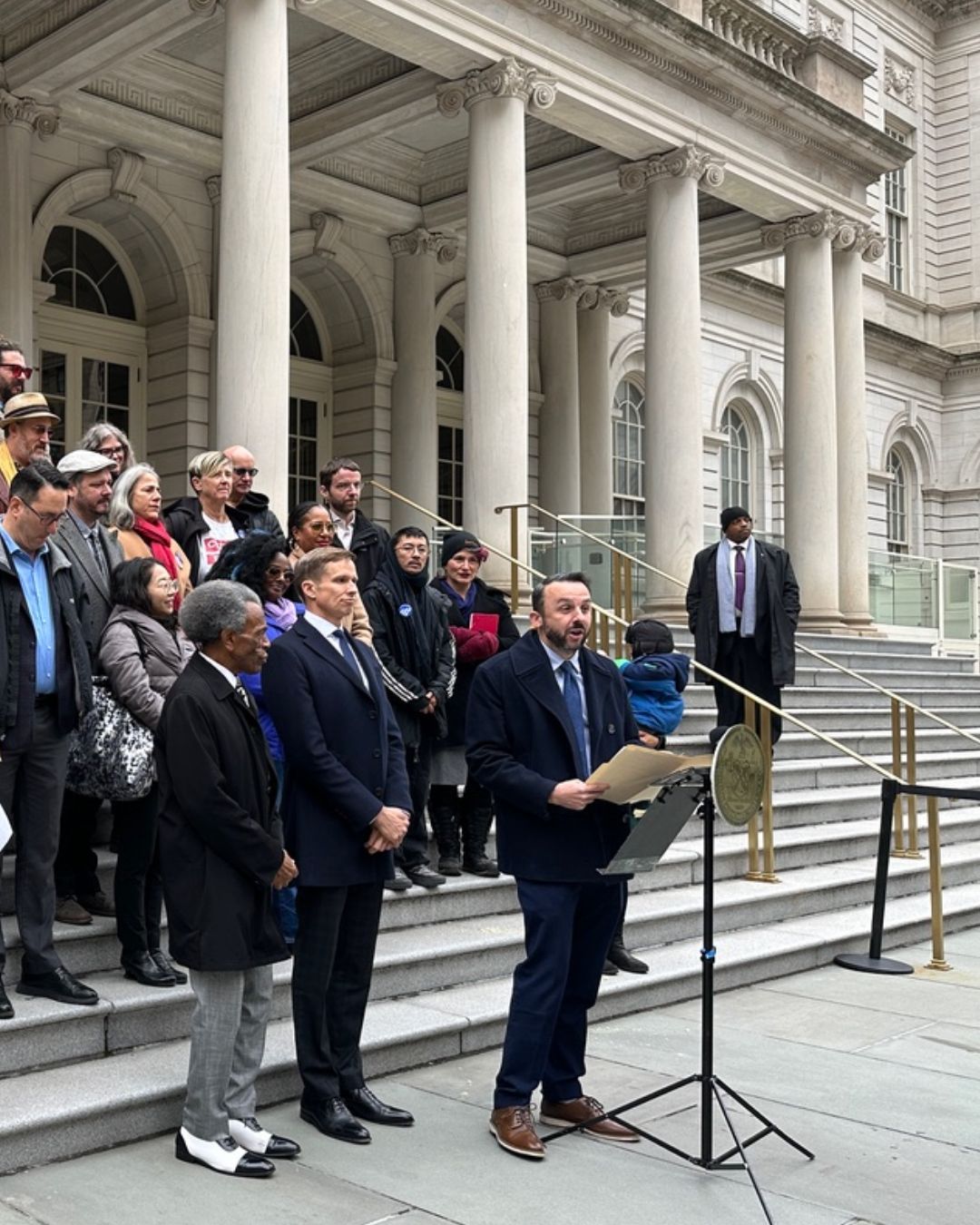
New York City has enacted a significant change to how cooperative corporations must handle apartment sale applications. Introduction 1120-B (Int. 1120-2024), now Local Law 58 of 2026, establishes clear timelines for co-op boards to acknowledge and act on sale applications — a process that historically had no statutory deadlines. For boards, managing agents, and prospective purchasers, understanding the new requirements and enforcement is essential.
What Is Intro 1120-B?
Intro 1120-B is a City Council measure that requires cooperative corporations to process sale (admission) applications within specified time frames. The legislation was approved by the Council on December 18, 2025, by a vote of 46-0-2, and became law as Local Law 58 of 2026 (law number 2026/058) after the Council overrode the Mayor's veto at the end of January 2026. For decades, co-op boards in NYC could take as long as they chose to approve or deny a sale; the new law ends that by imposing firm deadlines and designating an enforcement agency.
Why It Matters: A Process Historically Without Firm Deadlines
Co-op boards have long had broad discretion over when to respond to sale applications. That led to wide variation: some boards responded quickly, while others left applicants waiting for months with no statutory requirement to act. Delays created uncertainty for sellers, buyers, and their attorneys, and could effectively block sales without a formal denial. Intro 1120-B addresses this by requiring written acknowledgment within a set period and a decision within a defined timeframe after the application is complete, with limited extensions. The law does not tell boards how to vote — it requires that they respond within the timeline.
Key Requirements in the Law
15-day acknowledgment. The cooperative corporation must send a written acknowledgment of receipt of the sale application within 15 calendar days of receiving it. This confirms to the applicant that the application has been received and starts the clock for the board's process.
45-day decision. Within 45 days after the application is considered complete, the board must notify the prospective purchaser (via email or as specified) whether consent is granted, granted with conditions, or denied. What counts as a "complete" application will be clarified by HPD rules and guidance; boards and managing agents should document what they require and when they deem an application complete.
Extensions. The law allows limited extensions: one automatic 14-day extension by the board without purchaser consent, and further extensions only if the purchaser agrees. Boards cannot unilaterally extend beyond the initial 14-day extension.
Who Enforces It
The Department of Housing Preservation and Development (HPD) is designated as the enforcement agency. HPD is required to issue violations when co-ops fail to meet the timeline requirements. Civil penalties escalate: $1,000 for a first violation, $1,500 for a second violation, and $2,000 for third and subsequent violations. Penalties apply per violation, so repeated failures to meet deadlines can add up. Boards and managing agents should treat the timelines as mandatory and build internal processes to meet them.
What Boards and Managing Agents Should Do Now
Update policies and procedures. Adopt a clear process for receiving sale applications, sending the 15-day acknowledgment, and tracking when an application is "complete." Designate who sends the acknowledgment (e.g., managing agent) and who is responsible for ensuring the board acts within the 45-day window.
Define "complete" application. Until HPD publishes detailed guidance, boards should define in their application materials what documents and information are required for an application to be considered complete. Communicate this to applicants and their attorneys so there is no dispute about when the 45-day period begins.
Use the 14-day extension when needed. If the board needs more time for a legitimate reason (e.g., waiting for a reference or clarification), use the one automatic 14-day extension. For anything beyond that, obtain the purchaser's agreement in writing.
Document everything. Keep records of the date the application was received, the date the acknowledgment was sent, the date the application was deemed complete, and the date the decision was sent. This will help in the event of a dispute or HPD inquiry.
Industry Context: Deemed Approval and HPD Guidance
Commentary from trade groups and legal practitioners has noted that in other jurisdictions with similar timeline laws, failure to respond within the statutory period has sometimes been treated as a deemed approval of the application — meaning the sale could proceed even without express board consent. How HPD and the courts will treat missed deadlines under Intro 1120-B will depend on implementing rules and case law. As of early 2026, HPD had not yet published detailed rules or FAQs on what constitutes a complete application, how extensions are documented, and how enforcement and appeals will work. Boards and professionals should monitor HPD and City Council updates for that guidance.
Summary
Intro 1120-B (Local Law 58 of 2026) establishes clear, enforceable timelines for NYC co-op sale applications: 15 days to acknowledge receipt and 45 days after completion to notify the purchaser of the board's decision, with one 14-day board extension and further extensions only by purchaser agreement. HPD enforces the law with escalating civil penalties. Boards that adopt clear procedures, define "complete" applications, and document their compliance will be well positioned as HPD rolls out additional guidance.